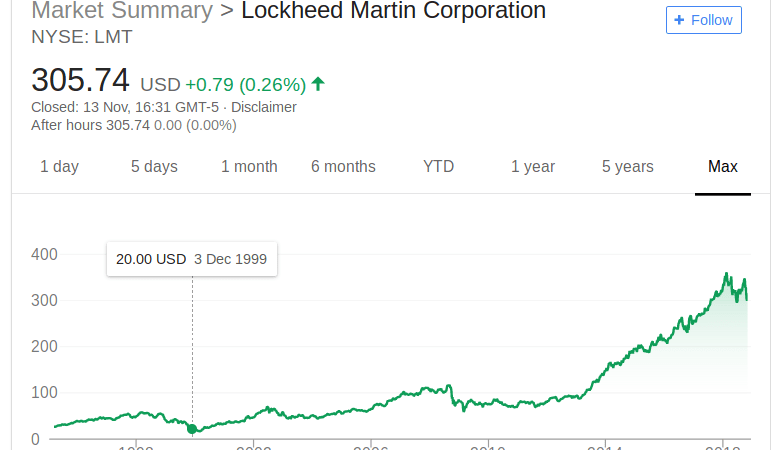
Imagine that you want to create a peaceful society under capitalism as it currently exists – you might find that you come across a problem. The most powerful people in society are capitalists, and they want any political ventures which happen to be somehow profitable to them. What you find is that there is precious little of peace which can be commodified. You cannot mass produce peace bullets, peace rifles and peace fighter jets and so there is no profit to be made from a state of peace. Those things would be a contradiction. In fact you can view peace, in a way, as an absence of demand for weapons and military gear. To industry and investors, this is unacceptable. You would relegate many powerful people to the rung of the middle and working classes if a peaceful state of affairs came to be. A peaceful economy would look very different to an economy today.
Which came first, the chicken or the egg? Capitalism or war? Obviously, it was war. In fact it is reasonable to consider that capitalism is in effect the ultimate optimisation in creating a war machine at a national level. This is evidenced by the fact that countries with competing ideologies more often than not wiped out by specific intervention by capitalist nations rather than by failing on their own merits (or lack thereof). If you need to prove this to yourself, try and find the socialist state for which there is no evidence of the USA somehow interfering with them either through sanctions or outright military intervention (this is of course made much more difficult now that the CIA has itself released files on their interventions).
Predominantly, capitalism is very good at producing vast quantities of consumable goods – for the purposes of this thought, it doesn’t matter why or how this is, it just matters that it’s true. As alluded to before, the primary ingredients of war are consumables – bullets, bombs, guns, vehicles and even people. If you have more and better resources than the other country, that gives you a massive advantage on the battlefield. It is good at producing consumables because it rewards people not just for producing those consumables, but doubly (or exponentially so) for each person they manage to organise into producing consumables on their behalf. We then end up in this feedback loop where war drives countries to capitalism (either through intervention by capitalist countries or by it adopting those strategies as a form of natural development or self-defense), and then capitalism drives countries to war as the powerful members of those societies require an increase in production to produce profit in order to remain powerful. A powerful example of this is how WW2 ended the Great Depression in America. Many pose the question: Does capitalism cause war? While I think that is true, it is also true that capitalism is itself a product of war.
The fact of the necessity of consumables in war and the predominance of consumer culture in western society seems in no way coincidental. Because we have this capability for producing all sorts of goods, we feel compelled to make use of them. There are of course several explanations for this such as instant gratification and directed marketing efforts aimed at pointing consumers at products they either find useful or gratifying.
The throwaway culture of course also has roots in war. After WW2 it was often found that it was actually cheaper and easier to dispose of weapons by dumping them in the sea rather than transporting them back home. This habit that we’ve formed obviously, as even shown in the article that I’ve linked to, has numerous environmental repercussions.
At the heart of this, though, there is a fundamental conundrum: If capitalism produces the ultimate war machine, then what could possibly stop it? If you think about it, any society which attempts to compete against a capitalist society will at some point or another end up on the end of one of its interventions and therefore “fail” as so many have before. Ultimately the capitalist societies are driven to do this by the need for resources and markets in which to sell its products. If you want peace then, are you not stuck? The only way out of this dilemma, it seems, is that other external factors may become more important than the ability of a society to compete with another – for instance, how does that society defend itself against the effects of climate change or against antibacterial resistance? These do not have solutions which are obviously rooted in consumer culture.
There is more to consider here, like how capitalism motivates people to take part in wars: while I might cover this in more depth another time it is important to consider that for a long time, drafts were seen as necessary. Nowadays, western countries do not rely on manpower quite as much as they used to – the advent of fighter jets and drones greatly increases the amount of work a single person in the military can accomplish. This may change when two such societies go to war. However, anecdotally, it also seems important that the in the UK at least, the Navy currently offers a large signing on bonus enough to cover the cost of a mortgage – something which ordinarily takes many years of work or the death of a family member to accomplish for those looking to get on to the housing ladder today.
 2.2 kOhm